The first FDA-approved enzyme replacement therapy (ERT) to cross the blood-brain barrier to reach the brain in addition to the body
AVLAYAH is approved for the treatment of neurologic symptoms in pediatric patients weighing at least 5 kg with Hunter syndrome prior to advanced neurologic disease. This approval is based on a reduction of heparan sulfate (HS) in the cerebrospinal fluid (CSF) surrounding the brain and spinal cord. Studies are ongoing to confirm how well it works in improving clinical symptoms.
AVLAYAH is not recommended for use in combination with other enzyme replacement therapies for the treatment of Hunter syndrome.
FDA=US Food and Drug Administration.
How does AVLAYAH work?
Watch the mechanism of action (MOA) video
AVLAYAH was studied across a broad group of pediatric patients with Hunter syndrome
The Phase 1/2 study was a multi-center, multi-cohort, open-label trial in 47 individuals with MPS II.
Study participant characteristics:
Both severe/neuronopathic (n=44) and attenuated/non-neuronopathic (n=3) MPS II individuals
Treatment status: ~2/3 (n=32) had prior ERT treatment and ~1/3 (n=15) had no prior treatment
Of those previously treated with ERT: 2 had also received gene therapy and 2 had previously received hematopoietic stem cell transplant (HSCT)
Individuals in the study were followed for a median of 2 years, with some for up to 4 years
Treatment with AVLAYAH resulted in normalization of CSF HS
Normal was defined as biomarker levels seen in individuals of similar age without MPS II
(41/44) of individuals achieved normalization of CSF HS* by Week 24.
At Week 49, this proportion was 98% (n=42/43)
At study start, 0% (0/47) of individuals had normal levels of CSF HS.
*CSF HS is the primary GAG that accumulates in the brain of individuals with MPS II.
Data Limitations
Data at Week 49 should be interpreted with caution and considered exploratory. The relationship between CSF HS and clinical response has not been established.
*CSF HS is the primary GAG that accumulates in the brain of individuals with MPS II.
On average, AVLAYAH resulted in 91% reduction of CSF HS levels by Week 24
In addition, AVLAYAH normalized urine GAG levels
Peripheral (body) results
AVLAYAH is approved for the treatment of neurologic symptoms in pediatric patients weighing at least 5 kg with Hunter syndrome prior to advanced neurologic disease. This approval is based on a reduction of heparan sulfate (HS) in the cerebrospinal fluid (CSF) surrounding the brain and spinal cord. Studies are ongoing to confirm how well it works in improving clinical symptoms.
uGAG
68%
(26/38) of individuals achieved normalization of uGAG by Week 24.
At Week 49, 90% of individuals (n=34/38) had normal uGAG levels
At study start, 4% (2/47) of individuals had normal uGAG levels.
Data Limitations
Data at Week 49 should be interpreted with caution and considered exploratory. The relationship between changes in total uGAG levels to clinical response has not been established.
Clinical results, including CNS and peripheral outcomes, are being assessed in the ongoing Phase 2/3 study
The safety of AVLAYAH was evaluated over a median of 2 years, with up to 4 years of follow-up
Serious side effects may occur with AVLAYAH, including hypersensitivity (allergic) reactions such as anaphylaxis, which can be life-threatening; infusion-associated reactions (IARs); anemia; and membranous nephropathy (kidney disorder that affects the filters that help remove wastes and fluids from the kidney).
In 47 patients treated with AVLAYAH:
IARs
The most common side effect with AVLAYAH was IARs, occurring in 87% of patients
6% of IARs were severe
IARs declined in frequency with continued use of AVLAYAH
IARs may still occur despite extended duration of AVLAYAH treatment
Anemia
Anemia was reported in 51% of patients treated with AVLAYAH
4% of patients (n=2) experienced severe anemia (defined as hemoglobin <8.0 g/dL)
Overall, the incidence and severity of anemia decreased over time
At baseline, 19% of patients had pre-existing anemia*
Incidence of anemia post initiating AVLAYAH was higher in patients with baseline anemia compared to those without baseline anemia
Hemoglobin lab parameters should be assessed prior to initiating AVLAYAH, 3 months after initiation, and periodically thereafter as clinically indicated
*Hemoglobin range: 8.0 g/dL to <lower limit of normal.
The most common side effects (≥20%) were IAR, upper respiratory infection, ear infection, fever, anemia, cough, vomiting, diarrhea, rash, COVID-19, runny or congested nose, fall, headache, skin injuries, and hives.
AVLAYAH is administered as an IV infusion once every week
AVLAYAH should be administered by a healthcare provider knowledgeable in the management of hypersensitivity reactions, including anaphylaxis
AVLAYAH is initially given in a clinic or hospital setting to ensure the close monitoring and management of any adverse reactions.
AVLAYAH is a once-weekly intravenous (IV) infusion with weight-based dosing.
Treatment will be initiated following a dose-escalation regimen to reduce the risk of IARs.
The infusion itself takes about 4 hours, though timing may vary based on the individual and could be longer. Additional time will be needed for check-in, preparation, monitoring, and follow-up care.
Once the individual has reached and tolerated the maintenance dose, the infusion time may be reduced to a minimum of 3 hours.
Home infusion under the supervision of a healthcare provider may be considered for individuals who have reached and tolerated the maintenance dose for AVLAYAH. The decision to have individuals move to home infusion should be made after evaluation and recommendation by a physician.
Denali Patient Services is here to support you
We know every patient’s journey is unique. Denali Patient Services offers personalized support services to patients, caregivers, and providers navigating therapy with AVLAYAH.
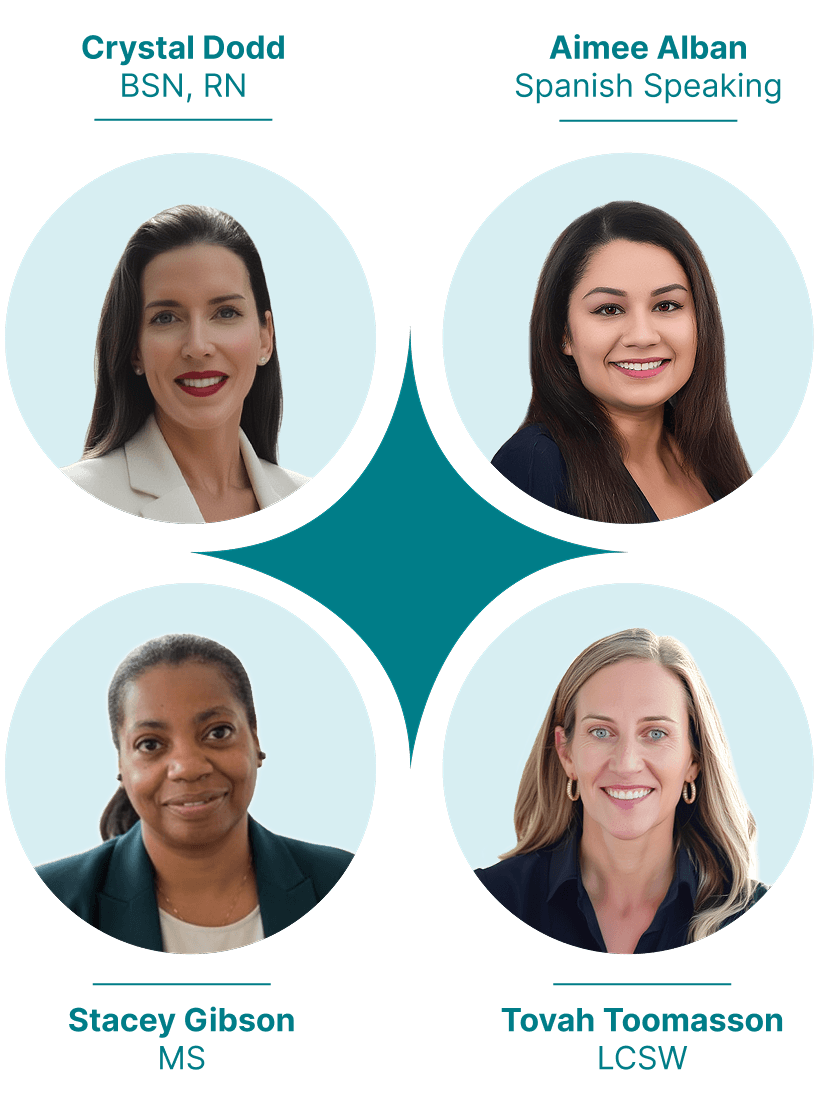
Our Denali CARE Team is here to help
Once enrolled in Denali Patient Services, patients will be connected with a dedicated Denali CARE Partner who will support them with information about coverage, affordability, and logistics. Denali CARE Partners can also provide one-on-one support and check-ins on request, share educational resources, and address patient and caregiver questions about program services and access.
Our Denali CARE Team is here to help with*:
Insurance Coverage
Treatment Coordination
Information and Resources
Financial Assistance
Copay Program
With the Denali Patient Services Copay Program, eligible patients with commercial insurance may pay as little as $0† for AVLAYAH. Please see Program Terms and Conditions for more information, and visit www.avlayah.com/copay to enroll.
Independent Copay Assistance Foundations‡
Denali CARE Partners can provide information about independent charitable organizations that may offer financial support.
*
Denali CARE Partners do not provide medical advice and are not a substitute for professional care. All decisions regarding medical care and treatment should be made between patients and their healthcare providers.
†
There is an annual cap on the amount of assistance that patients can receive over a one-year period. Federal and state laws and other factors may prevent or otherwise restrict eligibility. People covered by Medicare, Medicaid, the VA/DoD, or any other federal or state government plans are not eligible to enroll. Enrollment does not guarantee approval or payment of benefits. Denali Patient Services reserves the right to change this offer, eligibility, and terms of use at any time without notice. Visit avlayah.com/copay for full Terms and Conditions.
‡
Independent copay assistance foundations have their own rules for eligibility. Denali is not affiliated with these organizations and does not influence their decision-making or criteria. Availability may vary, and applying does not guarantee support. This information is provided as a resource only and does not represent an endorsement or preference for any particular foundation. The foundations referenced may not be the only ones that could potentially provide support.
To contact the Denali CARE Team for support, questions, or information about treatment with AVLAYAH:
AVLAYAH launch webinar, presented by Dr. Joseph Muenzer
Sign up for AVLAYAH news and updates
I am a Patient or Caregiver
I am a Healthcare Professional
Please select your role to continue
Measurable signs of disease activity called biomarkers were used to assess how well AVLAYAH works
Understanding biomarkers
Body biomarkers
Complex molecules called glycosaminoglycans (GAGs) accumulate in the body and brain of individuals with Hunter syndrome. Continued GAG buildup leads to symptoms arising and worsening over time
Urine GAG (uGAG) is a measure of GAG levels in the urine that is helpful in tracking how Hunter syndrome affects the body
In Hunter syndrome, the two types of GAGs that accumulate are heparan sulfate (HS) and dermatan sulfate (DS). HS is the primary GAG that accumulates in the brain, as well as in the liver and kidneys. DS is the GAG that accumulates in the periphery in tissues such as cardiac and respiratory tissues. uGAG levels include HS and DS, among other GAG types
Brain biomarkers
Cerebrospinal fluid heparan sulfate (CSF HS): A biomarker of GAG buildup in the brain, based on levels of HS measured in the fluid around the brain and spinal cord
Copay Program Terms and Conditions
It is important that every patient read and understand the full Denali Patient Services Copay Program Terms and Conditions. The summary provided here is not a substitute for reviewing the complete Terms and Conditions in their entirety. By enrolling, patients acknowledge and agree to the Terms and Conditions and the Denali Privacy Policy, available at: https://www.denalitherapeutics.com/privacy-policy/.
Enrollment does not guarantee approval or payment of benefits. Denali reserves the right to rescind, revoke, terminate, or change this offer, eligibility, and these Terms and Conditions at any time without notice.
As further described below, in general:
The Denali Patient Services Copay Program is open to AVLAYAH patients with commercial insurance that covers AVLAYAH, regardless of financial need. The program is not valid for patients whose AVLAYAH prescription is paid for in whole or in part by Medicare, Medicaid, or any other federal or state healthcare program. It is not valid for cash paying patients or where prohibited, taxed, or restricted by law (See Eligibility section in full Terms & Conditions.)
The Denali Patient Services Copay Program may help lower your AVLAYAH out-of-pocket costs. Out-of-pocket costs may include co-payment, co-insurance, and deductible out-of-pocket costs. The Denali Patient Services Copay Program provides support up to the Maximum Program Benefit. If a patient’s commercial insurance plan imposes different or additional requirements on patients who receive Denali Patient Services Copay Program benefits, Denali may adjust or discontinue benefits as required by your insurance plan design or applicable law. Whether you are eligible to receive the Maximum Program Benefit is determined by the type of plan coverage you have. (See Program Benefits section in full Terms & Conditions.)
AVLAYAH patient may pay as little as $0 out-of-pocket for each dose of AVLAYAH.
Denali will pay the remaining eligible out-of-pocket costs on behalf of the patient until the Denali payments have reached the Maximum Program Benefit. Patients are responsible for all amounts that exceed this limit. (See Program Details section in full Terms & Conditions.)
A Denali Patient Services Representative can help you understand eligibility for the Copay Program by calling 844-DNLI365 (844-365-4365).
I. ELIGIBILITY
*Eligibility Criteria: Subject to program limitations and terms and conditions the Denali Patient Services Copay Program is open to patients who have been prescribed AVLAYAH and who have commercial or private insurance that covers AVLAYAH, including state and federal plans commonly referred to as “healthcare exchanges plans.” This program helps eligible patients cover out-of-pocket costs related to AVLAYAH, up to program limits. There is no income requirement to participate in this program. Eligibility is dependent on product indication and patient must have a valid prescription for an FDA approved indication.
Patients under 18 years of age must have a parent, legal guardian, or other legally authorized representative to enroll and accept these Terms and Conditions on the patient’s behalf.
This offer is not valid if the entire cost of your AVLAYAH prescription is eligible to be reimbursed by your commercial plan or other private health or pharmacy benefit programs, or if your insurer or plan prohibits use of manufacturer copay assistance.
This offer is not valid for patients whose coverage for AVLAYAH is paid for in whole or in part by Medicare, Medicaid, or any other federal or state healthcare program. It is not valid for cash-paying patients or where prohibited, taxed, or restricted by law. A patient is considered cash-paying when the patient has no insurance coverage for AVLAYAH or where the patient’s insurance provides little or no meaningful coverage for AVLAYAH. Such patients may be considered ineligible because such coverage does not provide a material level of financial assistance for the cost of a AVLAYAH prescription. This offer is only valid in the United States and Puerto Rico at eligible pharmacies and sites of care.
This offer is not valid in combination with any other coupon, discount, prescription savings card, rebate, free trial, patient assistance program, or any other similar offer, including those from third parties or entities that assist insurers or health plans in managing costs.
II. PROGRAM BENEFITS
Denali may modify the benefit amount, in its sole discretion, to satisfy the out-of-pocket cost sharing requirement, including in circumstances where a plan or plan agent (including, but not limited to, a pharmacy benefit manager (PBM)) conditions waiver of some or all out-of-pocket cost sharing on enrollment in or use of this Program.
Some health plans may implement co-pay accumulator or co-pay maximizer programs. These programs are designed to adjust a patient’s out-of-pocket responsibility based on the availability of manufacturer co-pay assistance. In such cases, the Annual Program Maximum may vary over time to ensure that Program funds are applied for the patient’s benefit. Denali also reserves the right to reduce, modify, or discontinue assistance if the patient is enrolled in, or becomes subject to, a co-pay accumulator, co-pay maximizer, or similar program.
Health plans and pharmacy benefit managers (PBMs) are prohibited from enrolling or assisting in the enrollment of patients in the Denali Patient Services Copay Program. The patient or the patient’s legal representative must personally enroll to be eligible for Program benefits.
If at any time a patient begins receiving coverage for treatment under any federal, state, or government healthcare program (including but not limited to Medicare, Medicaid, TRICARE, Department of Defense, or Veteran Affairs programs), the patient will no longer be able to use the Denali Patient Services Copay Program and you must contact Denali Patient Services at 844-DNLI365 (844-365-4365) to stop your participation in this program.
Patients may not seek reimbursement for the value received from the Denali Patient Services Copay Program from any third-party payers, including a flexible spending account or healthcare savings account. Participating in this program means that you are ensuring you comply with any required disclosure regarding your participation in the Denali Patient Services Copay Program and of your insurance carrier or pharmacy benefit manager. Restrictions may apply. Offer subject to change or discontinuation without notice. This is not health insurance.
III. PROGRAM DETAILS
For all eligible patients the Denali Patient Services Copay Program offers:
A program benefit that covers the patient’s eligible out-of-pocket costs for AVLAYAH (copay, deductible, or co-insurance) on behalf of the patient, up to a Maximum Program Benefit determined by the program per calendar year.
The Program is intended to help cover eligible patient out-of-pocket costs for AVLAYAH. Denali may, where permitted by law, cover certain limited administration charges as determined by Denali. Coverage of administration charges will not apply for patients residing in states where it is prohibited by law.
Patients may pay as little as $0 out-of-pocket for AVLAYAH.
Denali will pay the remaining eligible out-of-pocket prescription costs on behalf of the patient until the Denali payments have reached the Maximum Program Benefit. Patients are responsible for all amounts that exceed this limit.
Maximum Program Benefit, Benefits May Change, End or Vary Without Notice: The program provides up to a Maximum Program Benefit of support to reduce a patient’s out-of-pocket costs that Denali will provide per patient for each calendar year, which must be applied to the patient’s out-of-pocket costs (copay, deductible, or co-insurance and annual out-of-pocket maximum). Patient Program Benefit amounts are unilaterally determined by Denali in its sole discretion and will not exceed the Maximum Program Benefit.
Please ask your Denali Patient Services Representative to help you understand whether your insurance coverage is likely to result in your reaching the Maximum Program Benefit amount by calling 844-DNLI365 (844-365-4365).
Participating patients are solely responsible for updating Denali with changes to their insurance including, but not limited to, initiation of insurance provided by the government, the addition of any coverage terms that do not apply Denali Patient Services Copay Program benefits to reduce a patient’s out-of-pocket costs, such as accumulator adjustment benefit design or a copay maximization program. Participating patients are responsible for providing Denali with accurate information necessary to determine program eligibility. By accepting payments from Denali made on behalf of participating patients, Plans likewise are responsible for providing Denali with accurate information regarding patient eligibility.
By enrolling, patients also agree to: (a) notify the Program immediately if their insurance coverage changes, including enrollment in a government healthcare program or other plan design that may affect Denali Patient Services Copay Program benefits; (b) comply with all requirements of their health plan; and (c) not submit any claim for reimbursement of amounts covered by this Program to any third-party payer, whether public or private, including a Flexible Spending Account (FSA) or Health Savings Account (HSA).
Patients may use the Denali Patient Services Copay Program every time they receive dose of AVLAYAH, up to the Maximum Program Benefit. Benefits reset each calendar year.
IV. ADDITIONAL TERMS
Non-Transferable: The Program benefit is offered to, and intended for, the sole benefit of eligible patients. The Program is limited to one per patient and is not transferable. The Program may not be sold, purchased, traded, assigned, or otherwise transferred. No substitutions are permitted; the Program is valid only for the product indicated.
No Cash Value: This offer is not health insurance, has no cash value, and may not be redeemed for cash. Assistance provided under the Program may not exceed the patient’s out-of-pocket cost for AVLAYAH or the Maximum Program Benefit, whichever is less.
Misuse: Denali may deny or discontinue Program benefits if it determines a patient is ineligible or if it suspects fraud, misuse, or other violation of these Terms and Conditions.
Reduction data
Treatment with AVLAYAH resulted in reductions in total urine GAG, urine HS, and urine DS levels
Body biomarker
uGAG
At Week 24, total uGAGs* were reduced by
57%
Body biomarker
uHS
At Week 24, uHS† was reduced by
86%
Body biomarker
uDS
At Week 24, uDS† was reduced by
91%
Data Limitations
The relationship between changes in urine HS, urine DS, and total urine GAG levels to clinical response has not been established.
*In clinical studies with AVLAYAH, total uGAGs were quantified using a standardized colorimetric assay.
†Differences in bioanalytical methods preclude meaningful comparison of HS/DS concentrations vs other clinical studies.